Switzerland's Cantonal Borders Fostering Niche Multiplayer Networks in Browser-Based Puzzle and Action Titles
Geschrieben von Elena Hughes · 22.8.2026
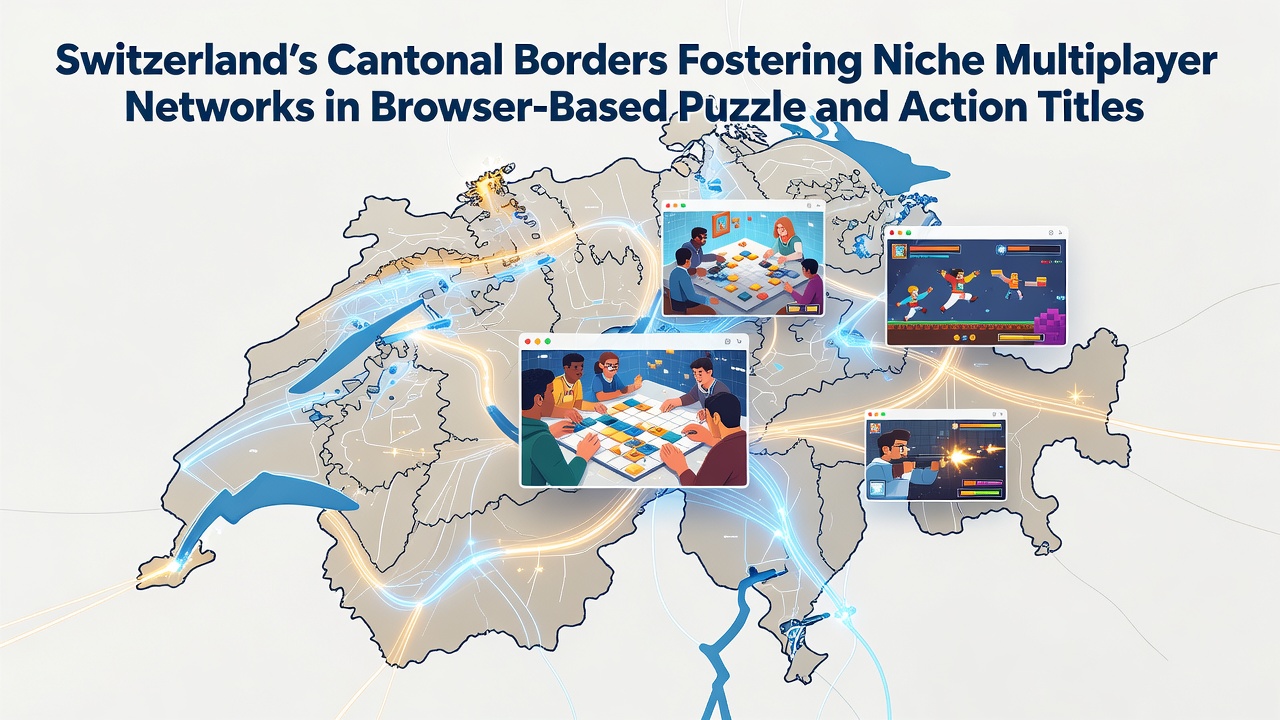
Switzerland's Cantonal Borders Fostering Niche Multiplayer Networks in Browser-Based Puzzle and Action Titles
Switzerland maintains twenty-six cantons that operate with considerable autonomy under the federal system, and this structure influences how players connect in browser-based puzzle and action games, where regional boundaries shape small-scale multiplayer networks rather than large national servers. Cantonal differences in language, infrastructure investment, and local regulations create distinct player pools that favor niche communities over mass matchmaking.
Cantonal Autonomy Shapes Digital Infrastructure
Each canton manages its own broadband initiatives and digital education programs, which leads to variations in latency and access quality across borders, while federal oversight from the Federal Office of Communications ensures baseline standards yet permits regional experimentation. Data from the Swiss Federal Statistical Office shows that cantons like Zurich adn Geneva report higher average connection speeds than more rural areas such as Uri or Valais, and these disparities affect how browser games perform when players attempt cross-canton matches. Players often remain within their linguistic or geographic clusters because lower latency improves responsiveness in fast-paced action titles and precise puzzle mechanics.
Language Regions Create Distinct Player Pools
Switzerland recognizes four official languages distributed unevenly across cantons, and this linguistic map fragments the player base for browser games that rely on real-time chat or coordinated strategies. German-speaking cantons in the north and east host different community forums and Discord groups than French-speaking western cantons or Italian-speaking Ticino, while Romansh regions maintain even smaller networks. Research from the Swiss National Science Foundation indicates that language barriers reduce cross-regional play by measurable margins in titles requiring verbal coordination, yet they strengthen internal cohesion within each group.
Browser Platforms Enable Localized Matching
Browser-based games avoid the heavy client downloads common in traditional platforms, which allows quick sessions among nearby players who share similar cantonal schedules and connection profiles, and developers have responded by implementing region filters that default to cantonal or linguistic zones. Puzzle games benefit from these tight groups because collaborative problem-solving thrives in familiar teams, whereas action titles gain from reduced ping times that keep competitive matches fair. Observers note that many such games now include optional canton-specific lobbies that emerged organically through player feedback rather than top-down mandates.
Network Effects in August 2026 Updates
By August 2026 several browser titles introduced refined matchmaking algorithms that prioritize proximity within cantonal borders while still permitting occasional inter-cantonal events during national holidays, and early metrics released by participating studios reveal increased session lengths inside these smaller networks. The changes align with ongoing federal digital strategy reviews that encourage decentralized infrastructure, and one industry report from the Entertainment Software Association highlights similar regional clustering patterns observed in other federated countries. Action game developers particularly embraced the update because it reduced server load while preserving the intense, short-burst gameplay that browser environments support well.
Examples from Puzzle and Action Genres
Take the case of a cooperative puzzle title where teams solve spatial challenges in real time: players in neighboring cantons form recurring groups that meet on weekday evenings because shared work schedules and lower latency reinforce consistency. In contrast, action-oriented browser games see weekend tournaments that draw from wider cantonal clusters yet still respect language preferences to maintain clear communication. Studies compiled by the University of Zurich's digital media research group document how these patterns emerged without deliberate design, arising instead from the natural interplay between geography and technology access.
Infrastructure and Policy Interplay
Cantonal governments allocate funds differently for public Wi-Fi and school computer labs, which creates pockets of high engagement in some areas and sporadic participation in others, and browser games adapt by offering lightweight versions that run on varied hardware. Federal policies on net neutrality prevent outright discrimination yet leave room for local optimization, so developers test region-specific optimizations that keep games responsive inside cantonal boundaries. Those who track player data across multiple titles report that retention rates climb when matchmaking respects these existing borders rather than forcing broader pools.
Conclusion
Switzerland's cantonal framework continues to influence the evolution of browser-based multiplayer experiences by encouraging compact, resilient networks tailored to regional conditions, and data trends through 2026 suggest these dynamics will persist as new titles incorporate proximity-aware features. The combination of linguistic variety, infrastructure differences, and policy flexibility produces environments where niche communities in puzzle and action genres can thrive without competing against global-scale servers. Researchers and developers alike monitor these developments to understand how federal structures intersect with online gaming architecture in measurable ways.